

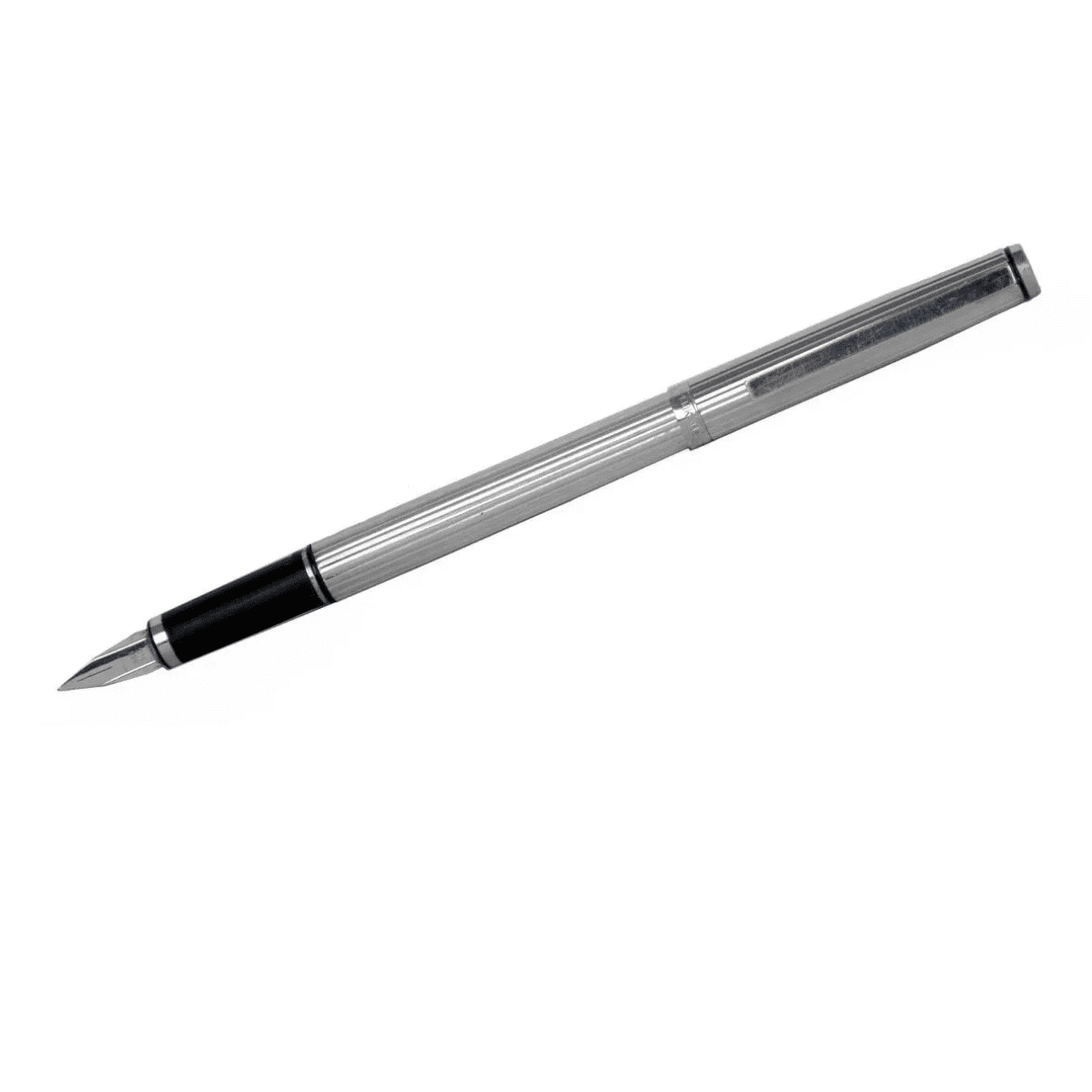
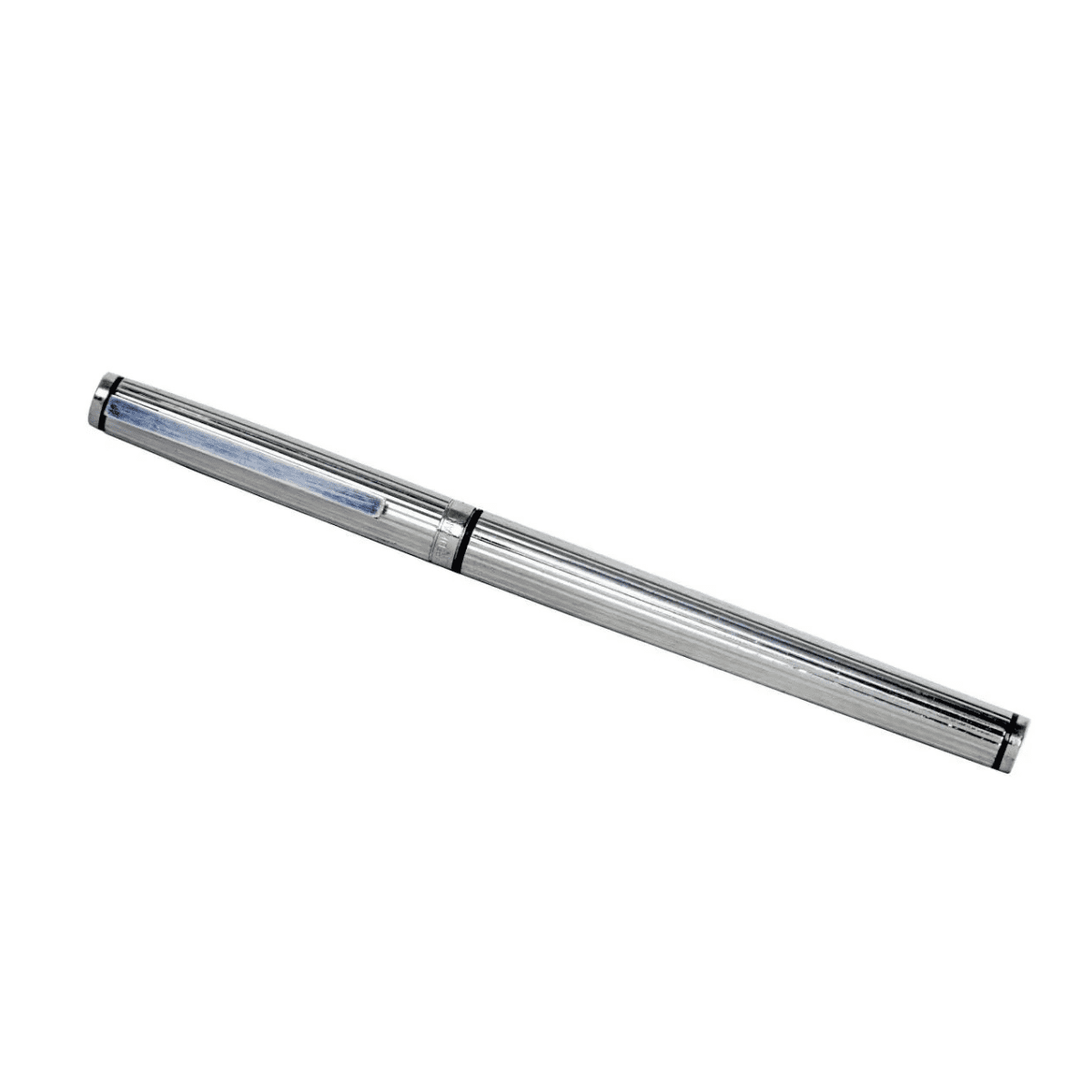
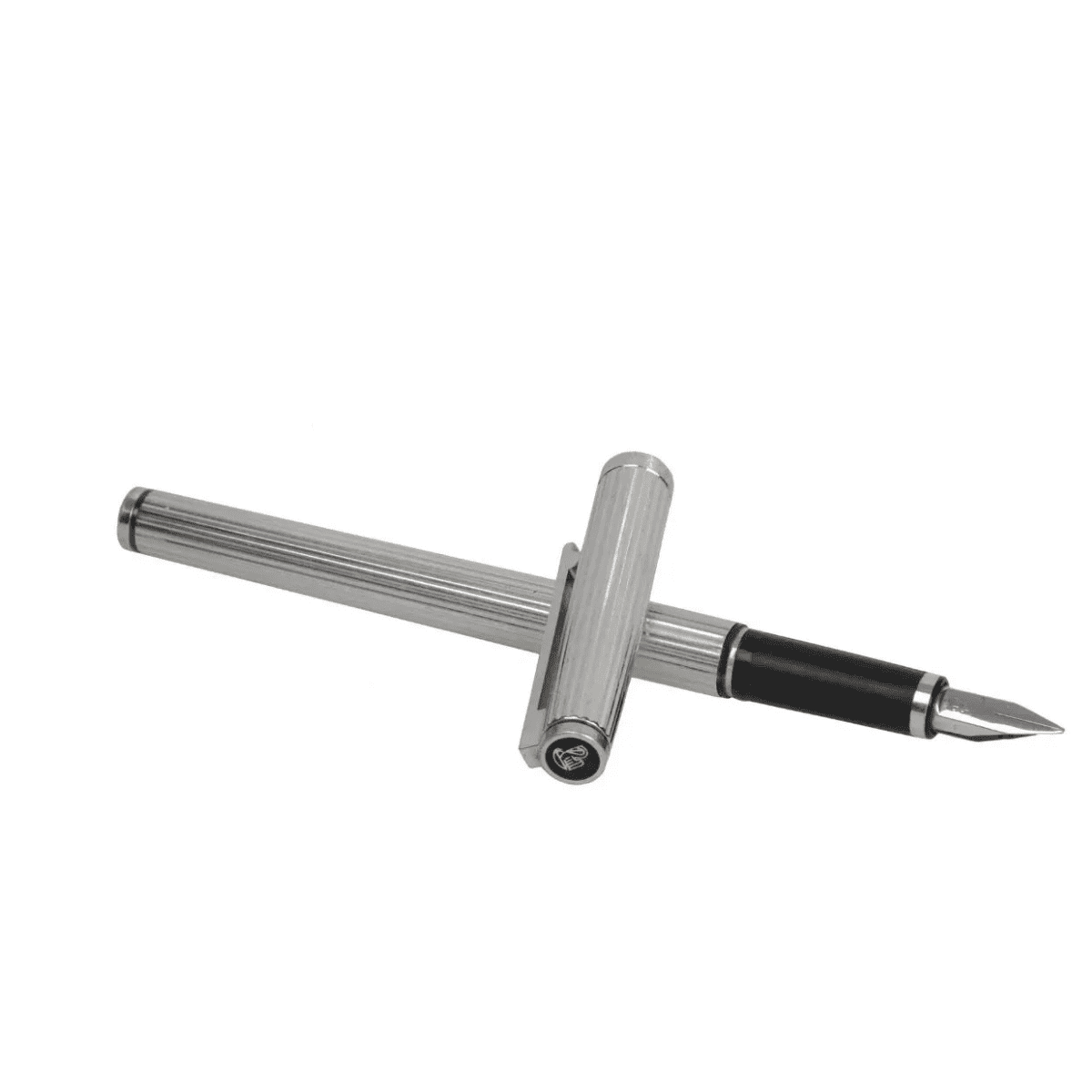
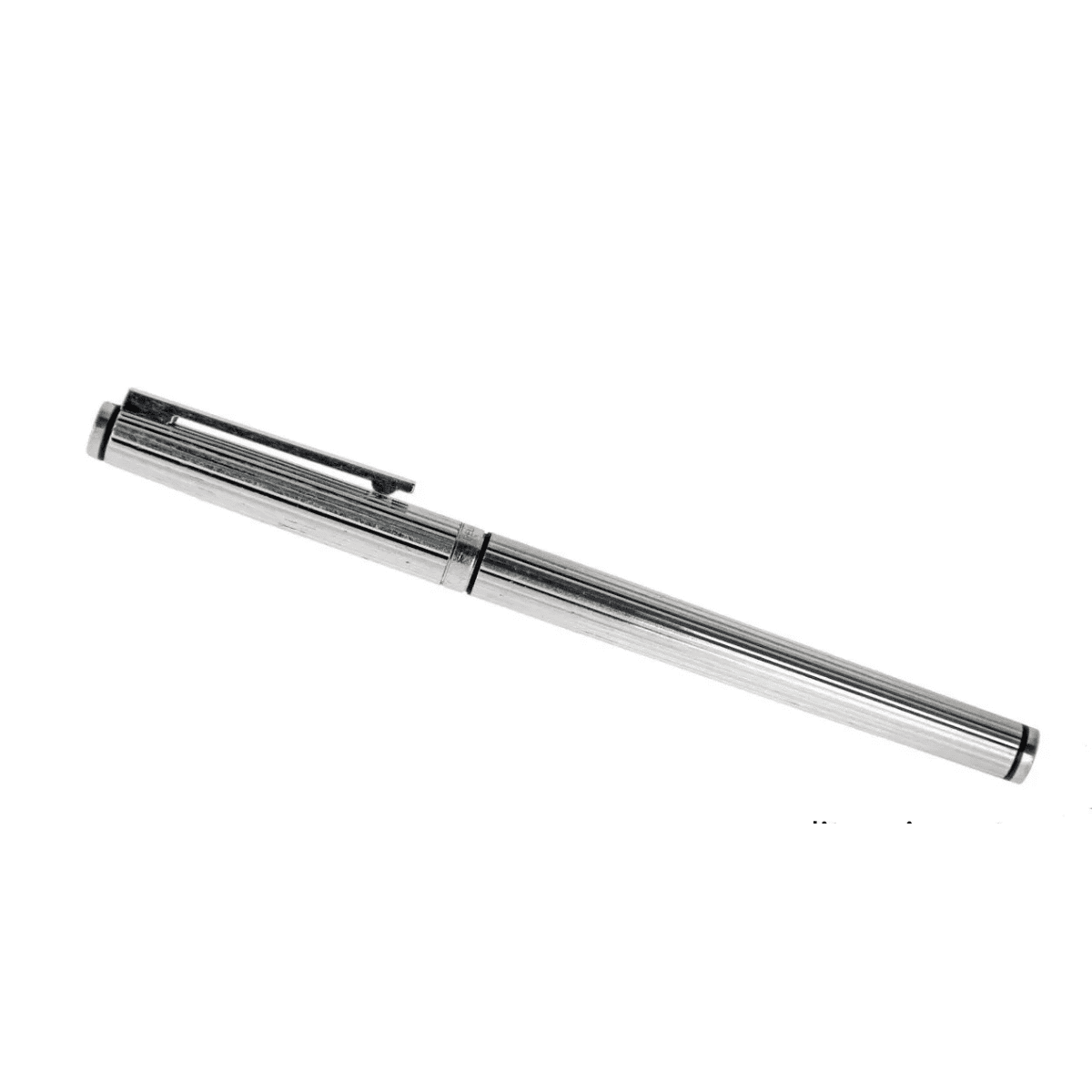
- Brand: Pelikan
- Model: Signum P590
- Country of manufacture: Germany
- Signum series introduced: 1979
- Design: Ulm School of Design
- Material: Silver-plated steel, guilloché finish
- Nib: 14K white gold, hallmarked 585 14C
- Nib width: Fine
- Nib character: Semi-flex
- Filling system: Converter or cartridges
- Length closed: 14 cm / 5½"
- Length posted: 15.5 cm / approximately 6⅛"
- Condition: Excellent
Introduced in mid-1979, the Pelikan Signum represented a strikingly modern departure for the historic German manufacturer. Its exceptionally clean, functional form was created by the celebrated Ulm School of Design, the post-war institution that carried the principles of the Bauhaus into the second half of the twentieth century.
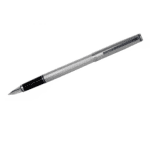
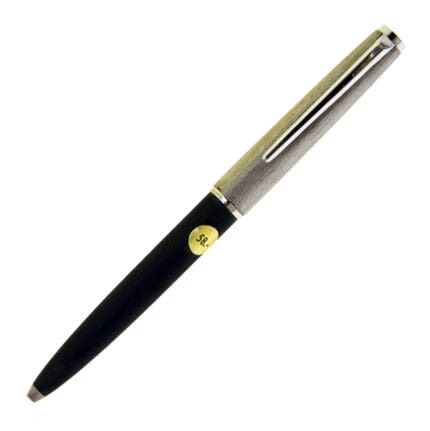
The pen offered here is the flagship of the original Signum line: the Pelikan P590, distinguished by its finely guilloché-finished silver-plated steel barrel and cap.
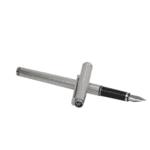
The design is slender, elegant and unmistakably modern. Its black gripping section provides a strong visual contrast with the metal body, while the Pelikan emblem is discreetly positioned above the pocket clip. The cap band is crisply engraved: PELIKAN – GERMANY The beautifully engineered slip cap closes with a satisfyingly firm action and distinctive click. When posted, it gives the pen excellent balance and comfortable proportions in the hand.
The P590 features its original solid 14K white-gold Fine nib, hallmarked 585 14C. The nib has a pleasantly semi-flex character, responding subtly to variations in writing pressure and allowing a modest degree of expressive line variation.
The pen may be filled using its piston converter or standard ink cartridges.
This Pelikan Signum P590 remains in excellent pre-owned condition.
It has been serviced and fully tested and is working properly. The guilloché finish remains beautifully preserved, the original engravings are crisp and clearly legible, and there is no personalized engraving.
There are no chips, cracks or other damage.
The Ulm School of Design was founded in 1953 and became one of the most influential institutions in post-war industrial design, continuing and developing many of the functionalist principles associated with the Bauhaus.
Its teaching emphasized clarity of form, intelligent use of materials and the close integration of design with modern manufacturing. Among those associated with the school were important designers, artists and architects including Max Bill, Otl Aicher, Hans Gugelot and Tomás Maldonado, while figures such as Walter Gropius and Charles and Ray Eames participated as visiting lecturers.
The Pelikan Signum perfectly embodies this philosophy: an object reduced to clear geometric form, carefully engineered for everyday use and visually distinguished without unnecessary ornament.
Alongside Montblanc, Pelikan played a major role in establishing Germany’s reputation as one of the great European centres of fine writing-instrument manufacture.
Pelikan’s origins date to 1832, when chemist Carl Hornemann began producing inks and artists’ colours in Hanover. The company officially dates its foundation to April 28, 1838, when its first price list was issued.
A decisive turning point came in 1863, when Günther Wagner joined the business as chief chemist and plant manager. He later acquired the company and, in 1878, registered the pelican emblem derived from his family coat of arms, creating what would become one of Germany’s most recognizable trademarks.
Pelikan continued to expand rapidly during the late nineteenth and early twentieth centuries, broadening its range of inks, office products and writing materials. In 1901, the company introduced its celebrated 4001 ink, which became one of the best-known fountain-pen inks in Europe.
Another major milestone followed in 1929 with the introduction of Pelikan’s first fountain pen. Its green-and-black appearance, transparent ink window, sophisticated feed and innovative differential piston-filling mechanism immediately distinguished it from competing designs and established Pelikan as one of the leading names in fine fountain pens.
From that point onward, Pelikan became internationally associated with high-quality piston-filling pens, technical innovation and distinctive German industrial design.
Half a century after the introduction of its first fountain pen, the Signum demonstrated that Pelikan remained willing to rethink what a modern writing instrument could look like. Introduced in 1979, the P590 combined the disciplined design principles associated with the Ulm tradition with finely patterned metalwork and a solid 14K white-gold nib.
The present example therefore represents an especially attractive expression of late twentieth-century Pelikan design, uniting the company’s long technical tradition with the clean modernism of the post-Bauhaus era.

%20P590%20Signum%20Guilloche%20Fountain%20Pen,%20Germany%201979&url=https://qualityswiss.net/product/pelikan-bauhaus-ulm-school-p590-signum-guilloche-fountain-pen-germany-1979/&media=https://qualityswiss.net/wp-content/uploads/2024/12/Pelikan-Bauhaus-800x800.png)


